
Mobile-First Local SEO: Boost Your Business Visibility on Smartphones
Everyone has a smart phone now and local SEO taps into this.
Even an AI image like this one is not too far from the truth of mobile phone usage!

Smartphones now lead the way for searches, so local businesses must rethink how they show up online. Local SEO optimized for mobile devices makes it easier for nearby customers to find and contact you. This guide explains mobile-first local SEO, how it works, the benefits it delivers, and practical steps you can take. Many firms miss out because their sites aren’t tuned for mobile users — costing enquiries and sales. Read on for clear advice on responsive design, page speed, Google Business Profile (GBP) setup, voice search, and structured data.
What Is Mobile-First Local SEO and Why Does It Matter?
Mobile-first local SEO means designing and optimising your online presence with mobile users as the priority. Since most searches now happen on phones, Google primarily uses the mobile version of a site when indexing and ranking. That makes the mobile experience the deciding factor for local visibility.
If your site isn’t mobile-friendly, you risk dropping in local rankings and losing traffic. Businesses that plan for mobile-first search typically see better engagement, more enquiries and higher conversion rates. As mobile use grows, making your local SEO mobile-ready is essential for staying competitive.
At MW Digital Yorkshire we specialise in local SEO services for SMEs, with practical mobile optimisation that helps local customers discover your business.
How Does Google's Mobile-First Indexing Impact Local SEO Rankings?
With mobile-first indexing, Google mostly looks at the mobile version of your pages for indexing and ranking. Sites that don’t deliver a smooth mobile experience may lose visibility, because Google prefers pages built for phone users.
To adapt, make sure your site is responsive and mobile-friendly: optimise images, speed up load times and keep content accessible without pinching or excessive scrolling. Aligning with Google’s mobile-first approach helps maintain — and often improve — local search positions.
What Are the Benefits of Mobile-First Local SEO for Businesses?
- Greater local visibility: Mobile optimisation increases the chance your business appears when people search nearby.
- Stronger engagement: Fast, easy-to-use mobile pages keep visitors interacting longer and reduce bounce rates.
- Better user experience: A streamlined mobile site makes it simple for customers to find contact details, directions and services.
Together, these improvements lead to more enquiries and higher conversion rates because mobile users can act quickly when they find you.
How Can Responsive Design Improve Mobile Local SEO Performance?

Responsive design lets your site adapt to any screen size so visitors get a consistent experience whether they’re on a phone, tablet or desktop. For local SEO, responsive sites perform better because they avoid duplicate mobile pages and make indexing simpler for search engines.
Search engines reward sites that give a reliable mobile experience. That means adopting responsive layouts, flexible images and content that reflows naturally — all of which help your local rankings.
What Are Best Practices for Mobile-Friendly Web Design in Local SEO?
- Optimise images: Serve photos at the right size and format so pages load quickly on mobile networks.
- Simplify navigation: Use clear, thumb-friendly menus so users can find key information fast.
- Test mobile-friendliness: Regularly run tools like Google’s Mobile-Friendly Test to spot and fix issues.
Following these steps creates a mobile-first site that meets both user expectations and search engine requirements.
How Does Responsive Design Enhance User Experience on Mobile Devices?
Responsive design removes friction: visitors don’t need to zoom or hunt for links, which improves engagement and encourages them to act — call, book or buy. A smoother experience also reduces bounce rates, giving your site a better chance to rank well.
Prioritising responsive design helps you keep mobile visitors on the site longer and convert more of them into customers.
Which Page Speed Optimisations Boost Mobile Local Search Visibility?
Page speed is vital on mobile. Slow pages lose users and can hurt rankings. Improving load times means visitors reach the information they need faster, which increases engagement and likelihood of contact.
Common speed improvements include optimised images, browser caching and reducing unnecessary requests. These changes make your pages quicker and improve mobile search performance.
How Do Core Web Vitals Affect Mobile Local SEO Rankings?
Core Web Vitals measure loading, interactivity and visual stability — three elements Google uses to assess user experience. Better scores on these metrics can boost your search visibility, especially on mobile.
To raise your Core Web Vitals, focus on faster loading (compress images, improve server response), quicker interactivity (reduce heavy scripts) and visual stability (avoid layout shifts). These fixes help both users and rankings.
What Techniques Improve Mobile Page Load Times for Local Businesses?
- Image optimisation: Compress and serve scaled images to cut file sizes without losing quality.
- Minify resources: Strip unnecessary characters from HTML, CSS and JavaScript to reduce file size.
- Browser caching: Enable caching so repeat visitors load pages faster.
Applying these techniques noticeably improves mobile load times and the overall user experience.
How Does Google Business Profile Optimisation Enhance Mobile Local Visibility?
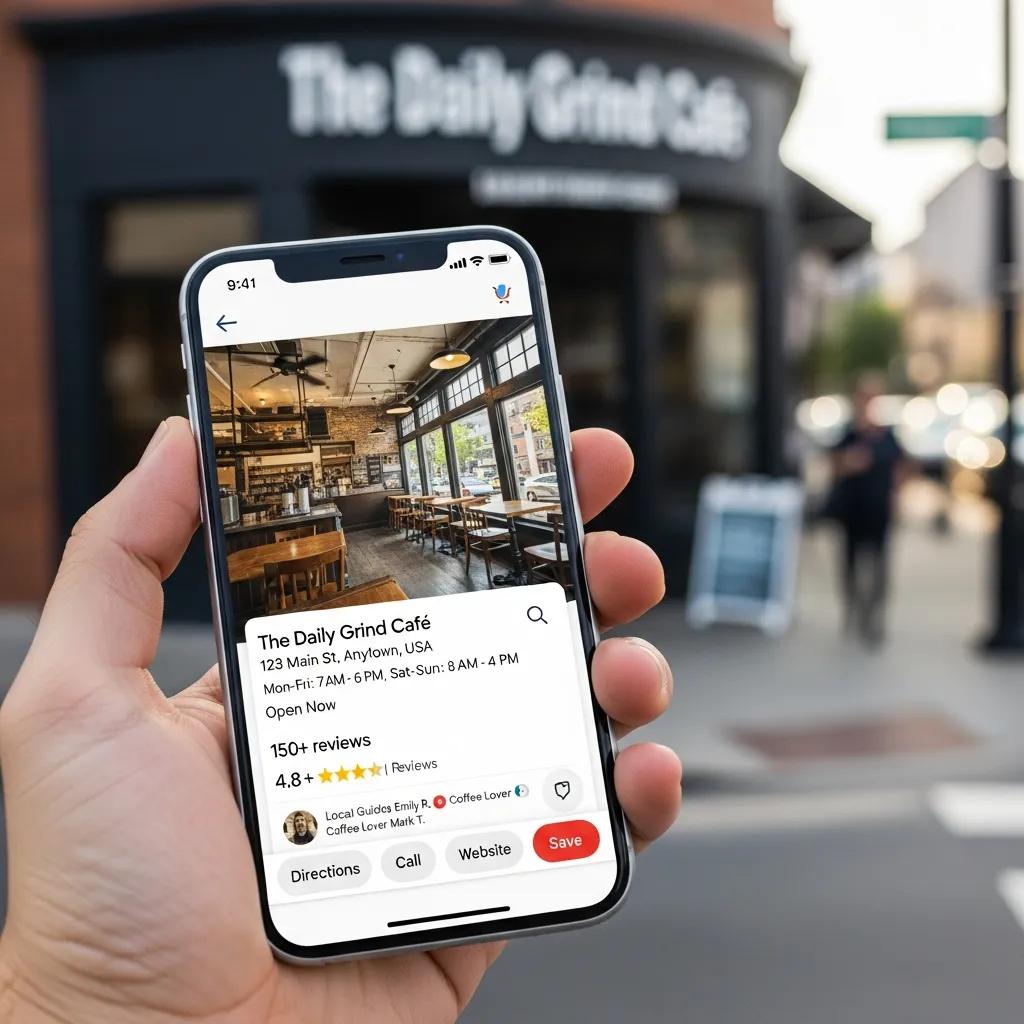
Google Business Profile (GBP) — formerly Google My Business — is one of the most powerful ways local customers find you on search and Maps. A complete, active GBP helps your business appear in the Local Pack and on mobile map searches.
Research highlights how local optimisation — especially for retailers — can increase organic traffic and conversions through stronger placement in Google’s Local Pack.
Local SEO for Retailers: Improving Organic Reach and Conversions
This research demonstrates the value of local optimisation for retailers: by fine-tuning business listings and structured data in Google, retailers can secure better placement in the Local Pack, drive more organic traffic and improve conversion rates.
Business optimisation in the digital age: Insights and recommendations, A Natorina, 2020
A fully optimised GBP includes accurate contact details, clear photos and regular updates. That makes it easier for potential customers to choose your business from their phones.
What Are Essential GBP Optimisation Strategies for Mobile Users?
- Complete business information: Keep address, phone number and opening hours accurate and current.
- Respond to reviews: Reply promptly and professionally to show you value customer feedback.
- Use posts and updates: Share offers, events and news to keep your profile fresh and relevant.
These steps make your GBP more useful to mobile searchers and more attractive to Google.
How Do Reviews and Posts Influence Mobile Local Pack Rankings?
Reviews and regular posts are signals of an active, trusted business. Positive reviews boost credibility, while fresh posts show ongoing relevance — both can help your position in the mobile Local Pack.
Encourage happy customers to leave reviews and keep your GBP updated to maximise local visibility and attract more mobile traffic.
What Voice Search Strategies Improve Local SEO for Mobile Devices?
Voice search is growing, especially on mobile devices. People ask conversational, location-based questions, so businesses should adapt content to match natural speech patterns.
Optimising for voice search means focusing on conversational phrases and clear answers that match how people speak when using voice assistants.
How Can Businesses Optimise for Conversational 'Near Me' Voice Queries?
- Use local keywords: Include location phrases naturally across your site so voice queries can match your pages.
- Create FAQ content: Write clear Q&A-style content that answers common customer questions — voice assistants often pull from these snippets.
- Apply schema markup: Structured data helps search engines understand your business details and surface them in voice results.
Following these steps improves your chances of being the voice assistant’s recommended local result.
Frequently Asked Questions
What is the difference between local SEO and traditional SEO?
Local SEO targets customers within a specific geographic area — optimising listings, local keywords and citations so nearby users can find you. Traditional (or national) SEO aims for broader visibility without that geographic focus. Choose local SEO when your customers visit or contact you in person or live nearby.
How can businesses measure the success of their mobile local SEO efforts?
Track mobile organic traffic, local search rankings and conversion actions (calls, directions, enquiries). Use Google Analytics for behaviour metrics like bounce rate and session length, and monitor GBP insights for profile views and interactions. Regular review helps you refine priorities.
What role does content play in mobile local SEO?
Content helps you answer customer questions and match search intent. Local, concise content that uses natural language and includes local keywords improves relevance. Regularly updated content also signals activity to search engines, which helps local visibility.
How important is mobile optimisation for e-commerce businesses?
Very important. A large share of shopping happens on mobile, so a slow or awkward mobile checkout can cost sales. Make sure product pages, images and checkout flows are mobile-friendly to keep customers completing purchases.
What are some common mistakes to avoid in mobile local SEO?
Avoid neglecting mobile design, running separate mobile sites, leaving GBP incomplete, or skipping structured data and local keywords. Also monitor performance — without tracking, you can’t see what needs fixing.
How can social media impact mobile local SEO?
Social channels drive traffic and awareness, and active profiles can appear in local searches. Sharing local content, promotions and events encourages engagement and reviews, which indirectly supports local SEO efforts.
How Can Structured Data Enhance Mobile Local SEO Visibility?
Structured data gives search engines a clear, standardised way to read your page content. Adding schema helps Google understand your business and can lead to enhanced results like rich snippets on mobile SERPs.
Rich results attract attention and can increase click-through rates from mobile searches, giving you a clearer path from search to contact.
What Schema Markup Types Are Crucial for Local Business Mobile SEO?
- LocalBusiness schema: Supplies core details — name, address and phone number — so search engines display accurate info.
- Review schema: Lets ratings and reviews appear in search results to build trust.
- FAQ schema: Surfaces common questions and answers directly in results, helping mobile users find quick answers.
Using these schema types improves how your business appears in mobile search and increases the chance users click through.
How Does Structured Data Improve Rich Snippets on Mobile SERPs?
Structured data helps search engines pull extra details — like ratings, prices or availability — into search results. Those rich snippets make listings more useful and attractive to mobile users searching for quick answers.
Adding schema increases the likelihood of richer search results, which can boost click-through rates and bring more qualified visits to your site.
| Schema Type | Description | Benefit |
|---|---|---|
| LocalBusiness | Provides essential business information | Improves local visibility |
| Review | Shows customer ratings and reviews | Builds trust and credibility |
| FAQ | Provides answers to common questions in search results | Increases engagement and visibility |
Structured data is a powerful, low-risk step local businesses can take to improve how they appear on mobile search pages.
Conclusion
Putting mobile users first is no longer optional — it’s how local customers find and choose businesses. By investing in responsive design, page speed, GBP optimisation and structured data, you make it easier for nearby customers to discover and contact you. These practical changes boost engagement and conversions and set you up for sustained local growth. If you’re ready to improve your mobile presence, start with the essentials today and build from there.