
How to Evaluate the Effectiveness of Your Local SEO Using Real Data for Measurable Results
Checking how your local SEO is performing shouldn’t be guesswork. When you use real data you can see what’s working, spot weak points and prioritise changes that actually move the dial. This guide walks through the metrics to watch, how to analyse website traffic and engagement, and the tools that make collecting and reporting local SEO data straightforward. Many businesses struggle to turn SEO activity into measurable outcomes — we’ll show practical ways to quantify results and turn insights into actions so your local search performance improves over time.
Moving to a data‑driven approach means you can measure and refine every stage of the customer journey, from discovery to conversion.
Data‑Driven Marketing: Strategies, Metrics & Performance Optimisation
Being able to capture and analyse large volumes of customer data has changed marketing. Where traditional methods left gaps, internet marketing and social platforms now let us track the funnel from first impression through to conversion, making performance measurable and optimisable.
DATA‑DRIVEN MARKETING: Strategies, metrics and infrastructures to optimise marketing performance, 2019
What Are the Key Metrics to Measure Local SEO Success?
Local SEO performance is best judged by a handful of consistent metrics that show how visible you are and how customers interact with your business online. These numbers tell you whether your local SEO is attracting the right traffic and turning searches into actions.
Which Google Business Profile Insights Should You Track?
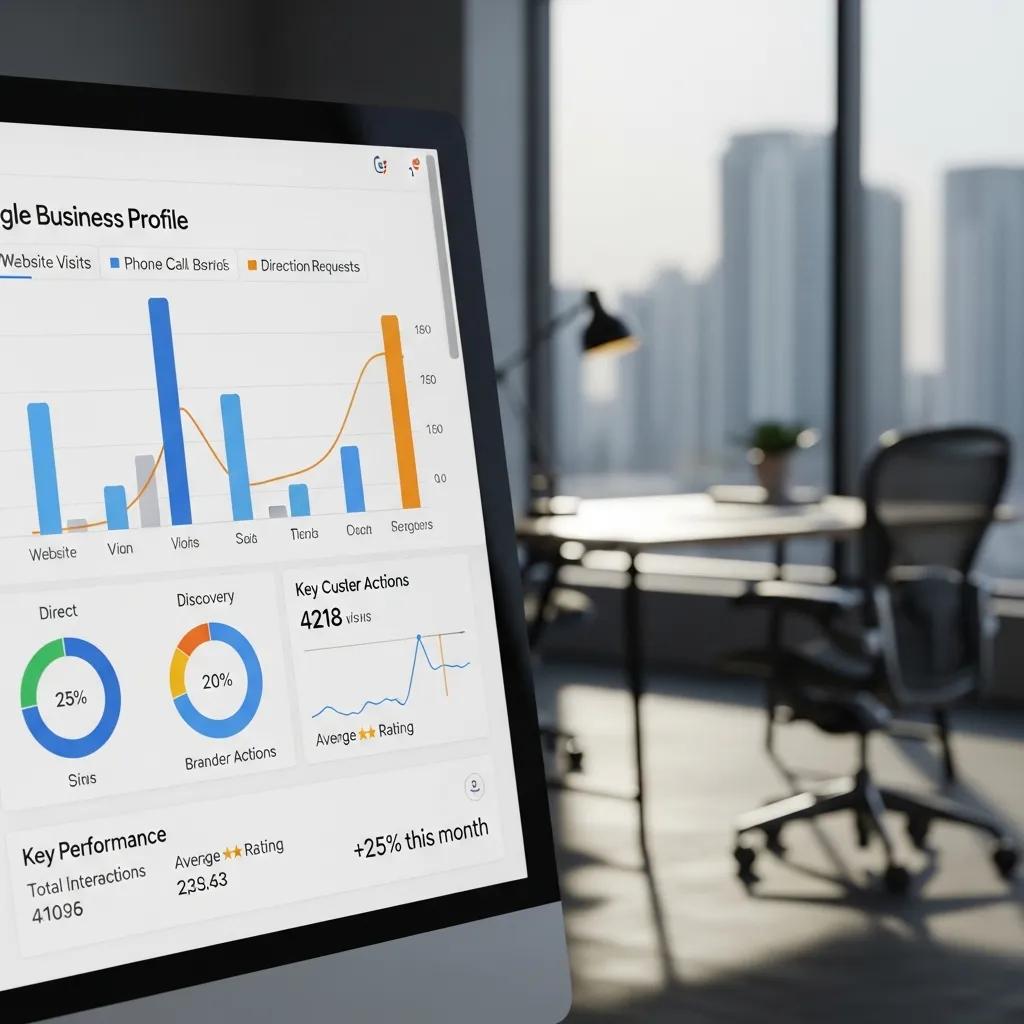
Your Google Business Profile is a rich source of local signals. Key insights to monitor are:
- Search impressions: How often your listing appears in search results — a clear visibility indicator.
- Customer actions: Visits to your website, direction requests and calls — these show intent and engagement.
- Review metrics: Volume and sentiment of reviews — these affect trust and local rankings.
Track these consistently to spot trends and decide where to focus optimisation efforts.
How Do Local Search Rankings and Visibility Impact Performance?
Your position in local search directly affects how many people find and contact you. Better rankings mean more clicks, calls and store visits — and appearing in the Google 3‑pack alone often delivers a noticeable bump in enquiries.
Real examples show that lifting local rankings translates into more customers. That’s why local keyword targeting, citations and review management are practical priorities for businesses aiming to grow through local search.
Seeing how SEO choices influence real business outcomes is essential for planning effective local marketing, especially for small and medium‑sized businesses.
SEO Tactics & Performance for Retail SMEs
This review evaluates the effects of different SEO tactics on retail SMEs, highlighting which approaches most reliably improve performance and customer acquisition in local markets.
Systematic Review on SEO and Digital Marketing Strategies for Enhancing Retail SMEs’
Performance, B Thango, 2024
How Can You Analyse Website Traffic and Engagement for Local SEO?
Website metrics show whether the visitors you attract through local search are finding what they need. Analyse these figures regularly to find pages that convert and pages that need work.
What Website Metrics Indicate Local SEO Effectiveness?
Keep an eye on these core site metrics:
- Bounce rate: A high rate can mean your landing pages don’t match search intent — time to tweak content or CTAs.
- Session duration: Longer sessions usually mean visitors are engaging with useful content.
- Conversion rate: The percentage of visitors taking desired actions (calls, bookings, purchases) — the clearest success measure.
Together these metrics give a rounded picture of how well your site supports local search goals.
How to Use Google Analytics to Measure Local Organic Traffic?
Google Analytics (GA) is the backbone for tracking local organic traffic. Use it to slice traffic by location and behaviour — then apply the insights to refine your local strategy:
- Set up local tracking: Configure geographic reporting, goals and relevant filters so GA captures local visitors accurately.
- Interpret the data: Look for patterns in user location, device, pages visited and drop‑off points.
- Apply the insights: Prioritise changes that drive the most local traffic and conversions — whether that’s landing page copy, local schema or citation fixes.
With GA you can turn raw visits into clear actions that improve local performance.
Research shows Google Analytics is effective for measuring user attention and testing changes across short timeframes.
Google Analytics for Website Traffic & User Attention Analysis
The chapter presents an analytical workflow using Google Analytics data, including virtual pageviews as an indicator of user attention, demonstrated across three months of A/B/C testing on a redesigned e‑shop.
Using Google Analytics to examine website traffic, T Semerádová, 2020
What Tools and Platforms Help Collect and Report Local SEO Data?
Choosing the right tools makes data collection and reporting faster and more reliable. Use a mix of free and paid platforms to cover visibility, behaviour and competitive benchmarking.
Which Free Tools Provide Essential Local SEO Insights?
These free options are a good starting point:
- Google Business Profile: Provides visibility and customer action metrics directly from search results.
- Google Analytics: Tracks website behaviour, goals and conversions.
- Local SEO checkers: Online scanners identify citation issues, NAP inconsistencies and on‑page local optimisation gaps.
Combine outputs from these tools to build a dependable baseline for reporting.
How Do Advanced Reporting Tools Enhance Local SEO Evaluation?
Paid or advanced tools add depth and automation to your reporting, which is useful as your local strategy scales:
- Real‑time tracking: See performance changes as they happen and react faster.
- Comprehensive reporting: Create scheduled reports that surface trends and anomalies over time.
- Integrations: Pull data from search, analytics and CRM systems for a joined‑up view of performance.
These capabilities help teams make evidence‑based decisions and demonstrate ROI more clearly.
How Do You Calculate and Track Local SEO Return on Investment?

To judge the financial impact of local SEO, compare the revenue it generates against the costs you invest. Tracking ROI keeps your strategy accountable and lets you prioritise the highest‑value activities. See our SEO pricing section for cost context.
What Is the Formula for Calculating Local SEO ROI?
Where:
- Net profit is revenue attributed to local SEO minus the expenses tied to those efforts.
- Cost of investment covers agency fees, tools and internal time spent on local SEO.
This formula gives a clear percentage that shows whether your local SEO delivers a positive return.
How to Incorporate Customer Lifetime Value in ROI Analysis?
Adding customer lifetime value (CLV) gives a longer‑term view of return, showing how much an acquired local customer is worth over time. To include CLV:
- Define CLV: Calculate average revenue per customer across their expected lifetime with your business.
- Adjust ROI: Use CLV instead of single‑transaction revenue to reflect long‑term value.
- Monitor trends: Watch how CLV shifts as you change local acquisition tactics.
Factoring CLV helps you evaluate whether local SEO investments pay off beyond the first sale.
How Can You Turn Local SEO Data Into Actionable Strategies?
Data is only useful when it leads to practical changes. Use your reports to prioritise fixes that will drive the most impact — faster page load times, clearer local content and review management are common starter wins.
How to Identify Strengths and Weaknesses From Your Local SEO Data?
- Run regular data reviews: Schedule weekly or monthly checks to spot rising or falling metrics.
- Benchmark competitors: Compare visibility, reviews and rankings to see where you’re ahead or behind.
- Set targeted goals: Translate gaps into specific tasks — e.g., improve 3‑pack visibility for top local keywords.
That process converts raw numbers into a clear action plan.
What Steps Drive Continuous Improvement in Local SEO Performance?
- Review data consistently: Keep performance dashboards up to date and inspect changes.
- Iterate quickly: Test changes, measure results and repeat what works.
- Stay current: Keep an eye on local SEO trends and algorithm updates to avoid surprises.
Continuous, small improvements compound into noticeable local growth.
| Metric | Description | Value |
|---|---|---|
| Search Impressions | How often your business appears in search results | Higher counts show stronger visibility |
| Customer Actions | User actions recorded on your Google Business Profile | More actions indicate better engagement |
| Conversion Rates | Share of visitors completing chosen actions | Higher rates signal effective local SEO and UX |
Local SEO evolves as search behaviour and algorithms change. By tracking the right metrics, analysing site behaviour and using the right tools, you can measure progress and make targeted improvements that grow local visibility and customer interactions.
Frequently Asked Questions
What are the common mistakes to avoid in local SEO?
Typical errors include ignoring your Google Business Profile, not collecting or responding to reviews, and failing to use local keywords in page content. Mobile optimisation is essential since many local searches happen on phones. Also, inconsistent NAP (name, address, phone) details across listings will harm local rankings. Fixing these basics often delivers quick wins.
How often should I review my local SEO strategies?
Review local SEO at least every quarter. That cadence lets you see meaningful trends and test improvements. If you notice sudden traffic or ranking changes, carry out a more immediate review to diagnose the cause and respond quickly.
Can social media impact local SEO performance?
Yes. While social signals aren’t a direct ranking factor, active social profiles increase awareness, drive local traffic and can generate backlinks or citations. Those indirect effects help your overall local presence.
What role do online reviews play in local SEO?
Reviews are vital: they influence trust and local search visibility. Quantity and quality of reviews affect how search engines and customers perceive your business. Encourage satisfied customers to leave reviews and reply to feedback to build credibility.
How can I track my local SEO progress over time?
Use Google Analytics for traffic and behaviour, Google Search Console for query and ranking data, and Google Business Profile insights for local actions. Combine these with regular KPI reporting (visibility, actions, conversions) to monitor progress.
What is the importance of local backlinks in SEO?
Local backlinks signal to search engines that your business is relevant in the community. High‑quality links from local news sites, business directories or partner organisations boost rankings and referral traffic. Building local relationships often creates the best backlink opportunities.
Conclusion
Measuring local SEO with real data makes your marketing decisions clearer and more effective. Track the right metrics, use the appropriate tools and turn findings into focused actions. Start with small tests, measure the impact and scale what works — your local visibility and customer enquiries will follow. For help turning these insights into a local growth plan, explore our resources and services.